“Where there is preparation,
there is no fear”
~Hwang Kee (1914 - 2002)
World Moo Duk Kwan Founder
Rank Advancement
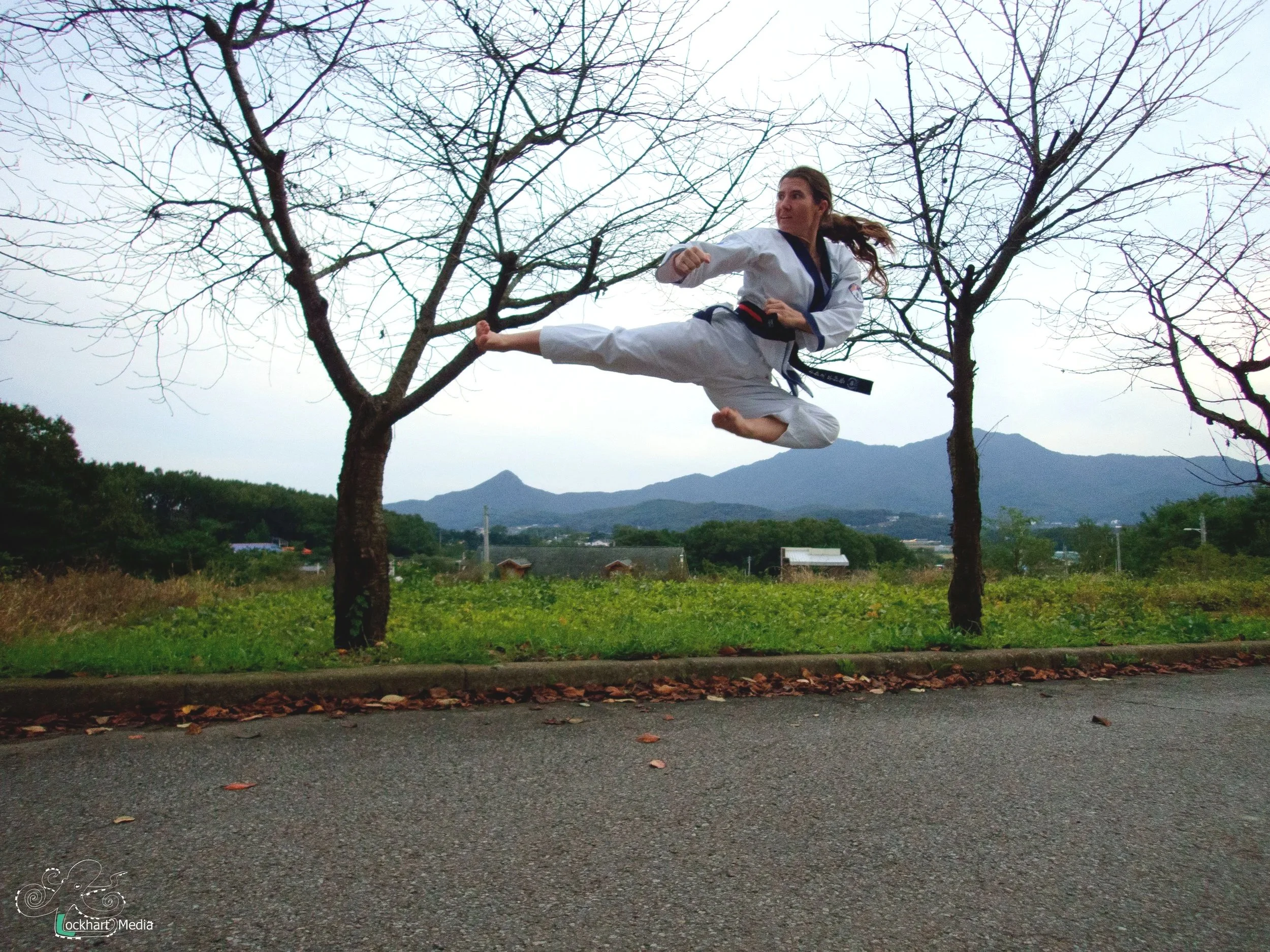
White Belt Stripe Testing
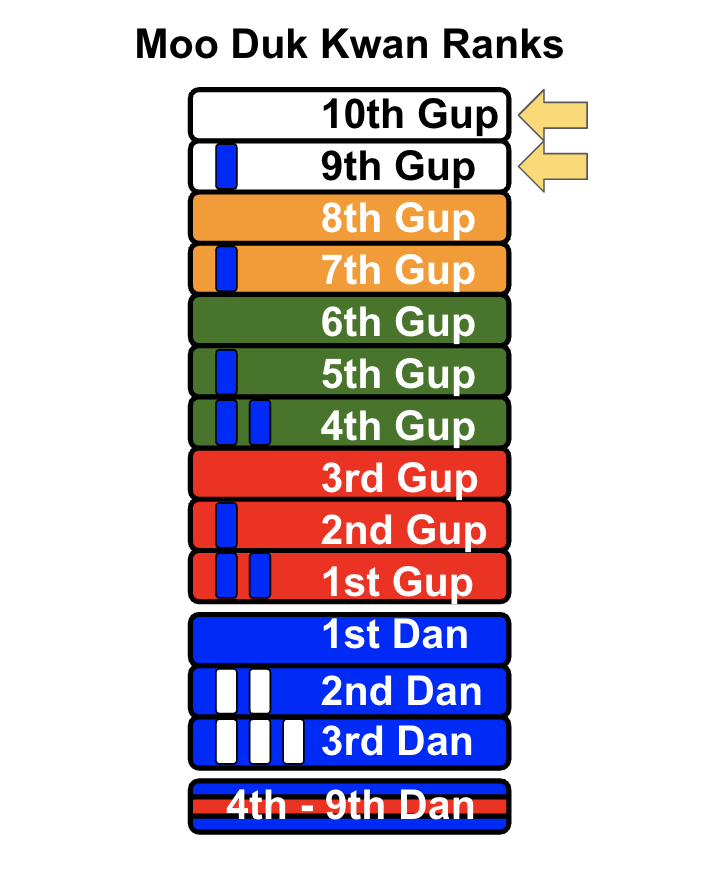
Each month white belt students are tested during their normal class time for stripes. Stripes represent their progress toward being prepared for 8th Gup (orange belt) testing.
A total of eight stripes are earned on the white belt - two orange, two green, two red and two blue.
Students are tested on stances, hand techniques, kicks, tumbling, blocking, wrist releases, the bat game and form pattern one, Gi Cho Hyung Il Bu. Those testing for red or blue stripes also demonstrate kyok pa (board breaking).
Gup Testing (Orange - Green - Red)
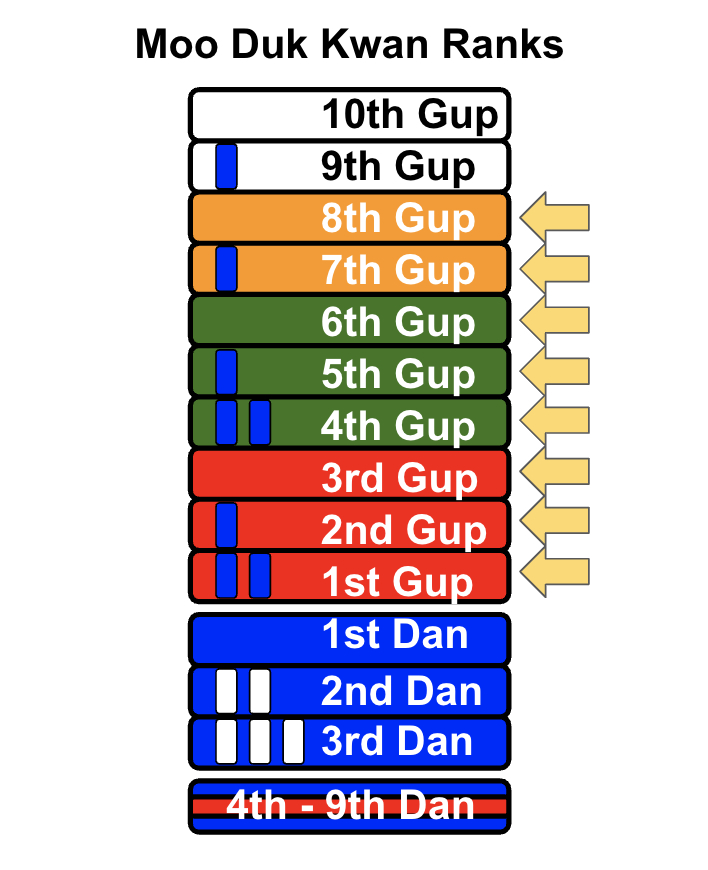
Belts let you observe your progress in the seasons of training: White (Winter - blank slate, new beginnings), Orange (added as a stepping stone from White to Green. Sorry, no deep philosophical meaning here), Green (Spring - new growth, budding skill), Red (Summer - fire and passion, heat and power), Blue (Autumn - harvest, reaping the rewards of your efforts, instilling Shim Gung - mental power - and relaxation into your techniques).
Your rank is recognized worldwide. Test requirements and minimum training times are set by the World Moo Duk Kwan and the US Soo Bahk Do Moo Duk Kwan Federation. Minimum training time between tests is generally three months. Active students have access to the list of testing requirements for their rank, along with videos of all material, through the Soo Bahk Do Institute platform.
Testings (Gup Shim Sa) are held on a Saturday near the end of each month, giving students the opportunity to test when they are ready. See the Events page for upcoming test dates.
Dan Testing (Blue Belt)
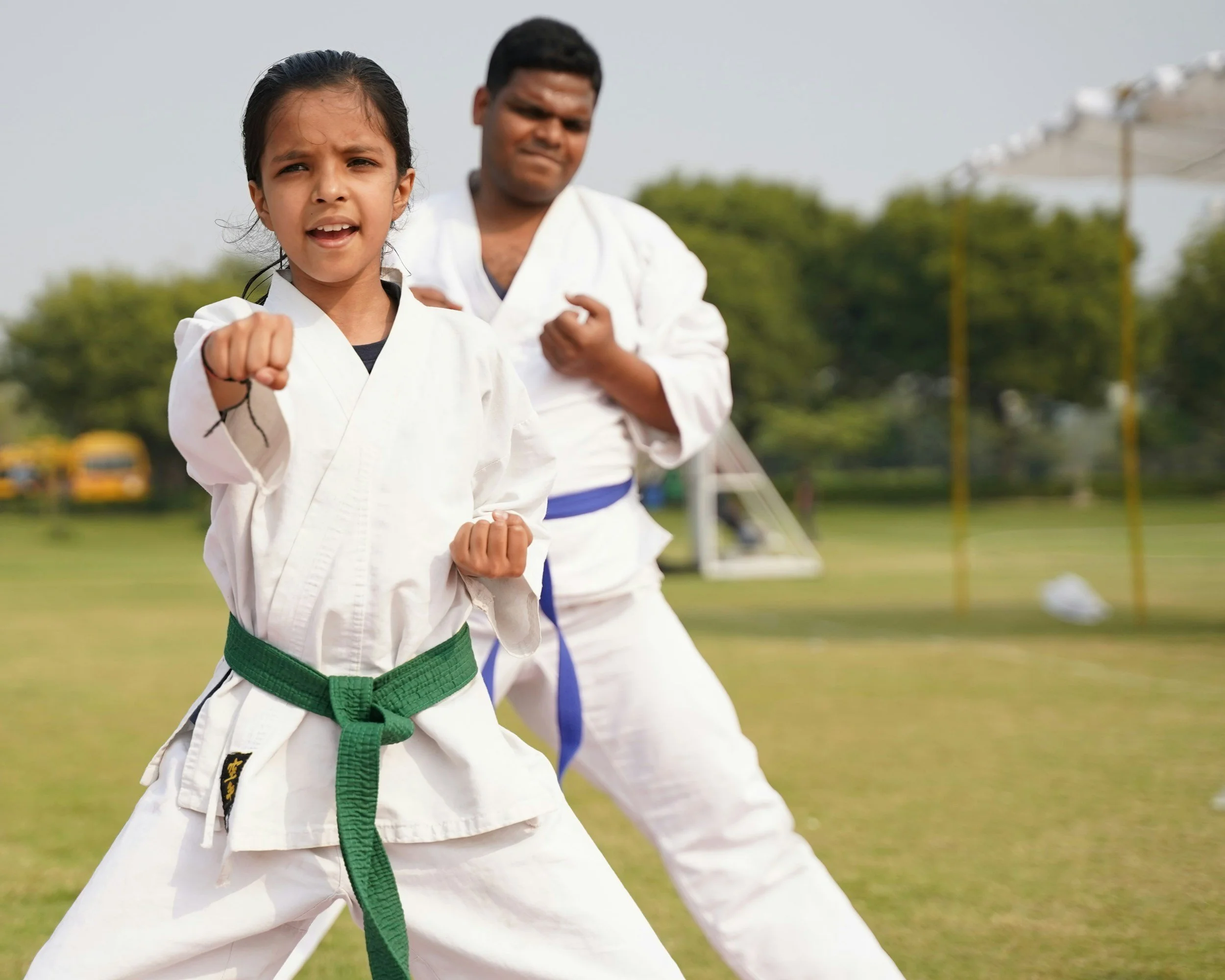
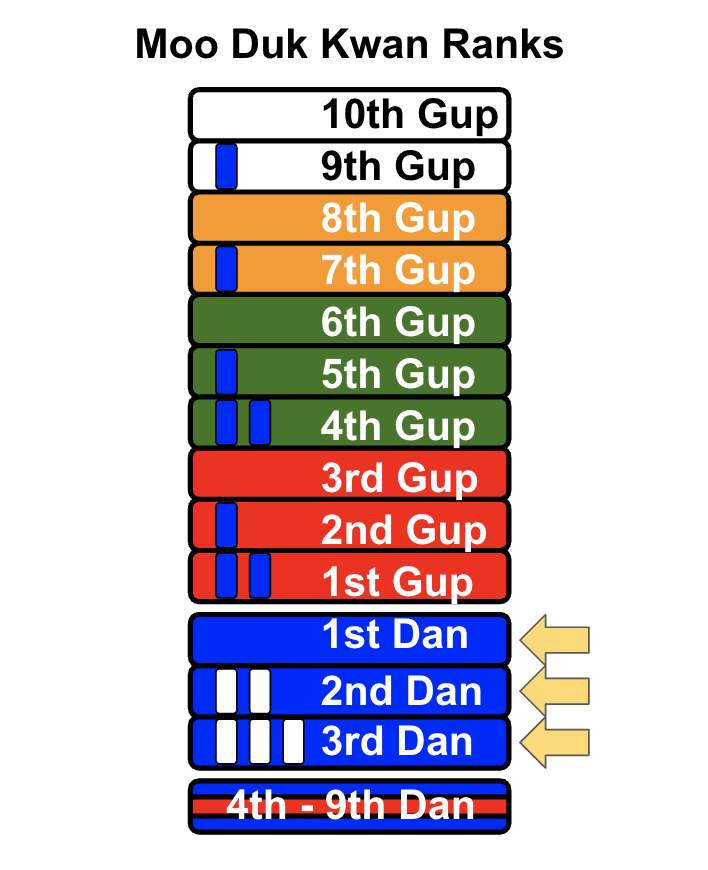
Years of training go into preparing for Blue Belt. It is the goal of many, achieved by few. Those who do achieve dan rank are ensconced in the legacy of the Moo Do Kwan, their name recorded and dan bon assigned by the grandmaster. The dan bon, or dan number, is part of our Moo Duk Kwan history and discipline, and identifies seniority amongst practitioners of the same dan rank. At regional, national and international events, rank and seniority by dan bon are recognized and are often a conversation starter between practitioners who don’t yet know each other.
Dan Rank is Soo Bahk Do’s Black Belt equivalent. Philosophically, our founder Hwang Kee chose not to use black, which in Korean culture signifies perfection or death, as the Dan rank in our style. Soo Bahk Do is about self-defense and preservation of life, not death, and we don’t believe anyone can be perfect; so rather than black, our art uses the Midnight Blue belt which represents continuous growth and the beginner’s mindset (Cho Shim).
Exams for Dan level (Dan Shim Sa) are held regionally, twice a year. Region 9 exams are held in April and October. Region 9 consists of all of California, Nevada and Hawaii, however the Dan Shim Sa is generally hosted in Southern California (San Diego - Long Beach).
Ko Dan Ja Testing (Master Belt)
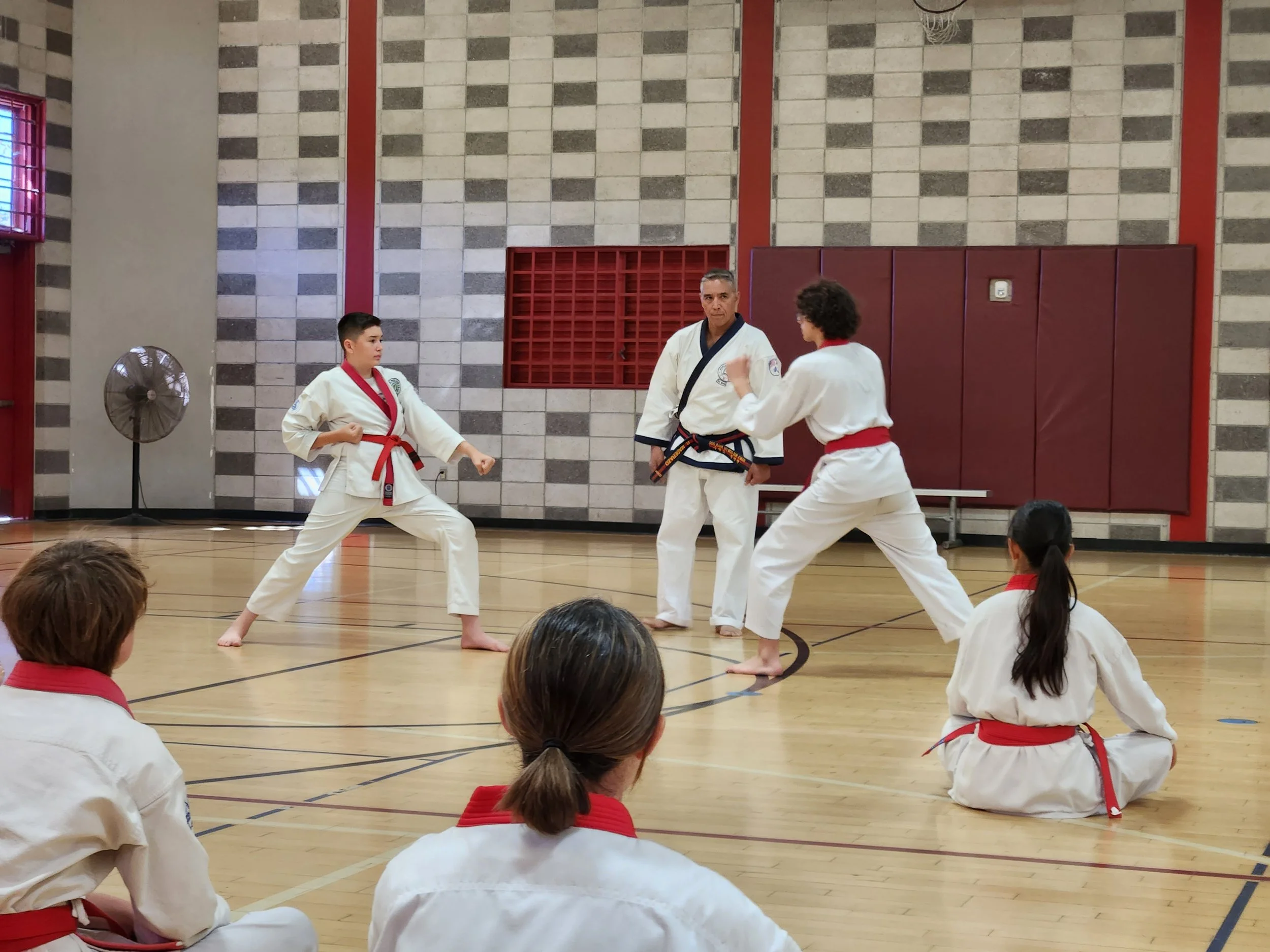
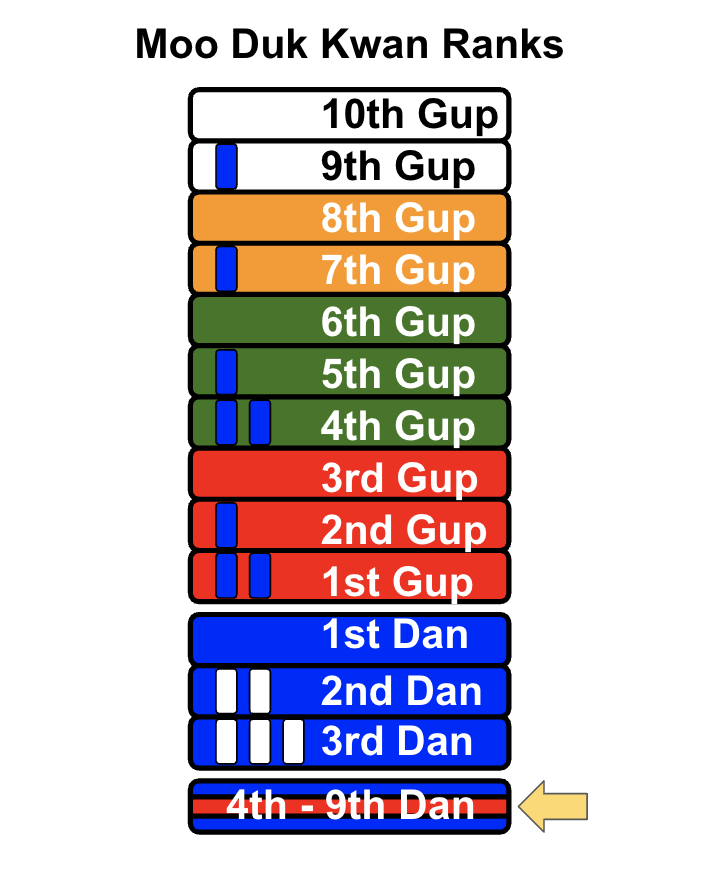
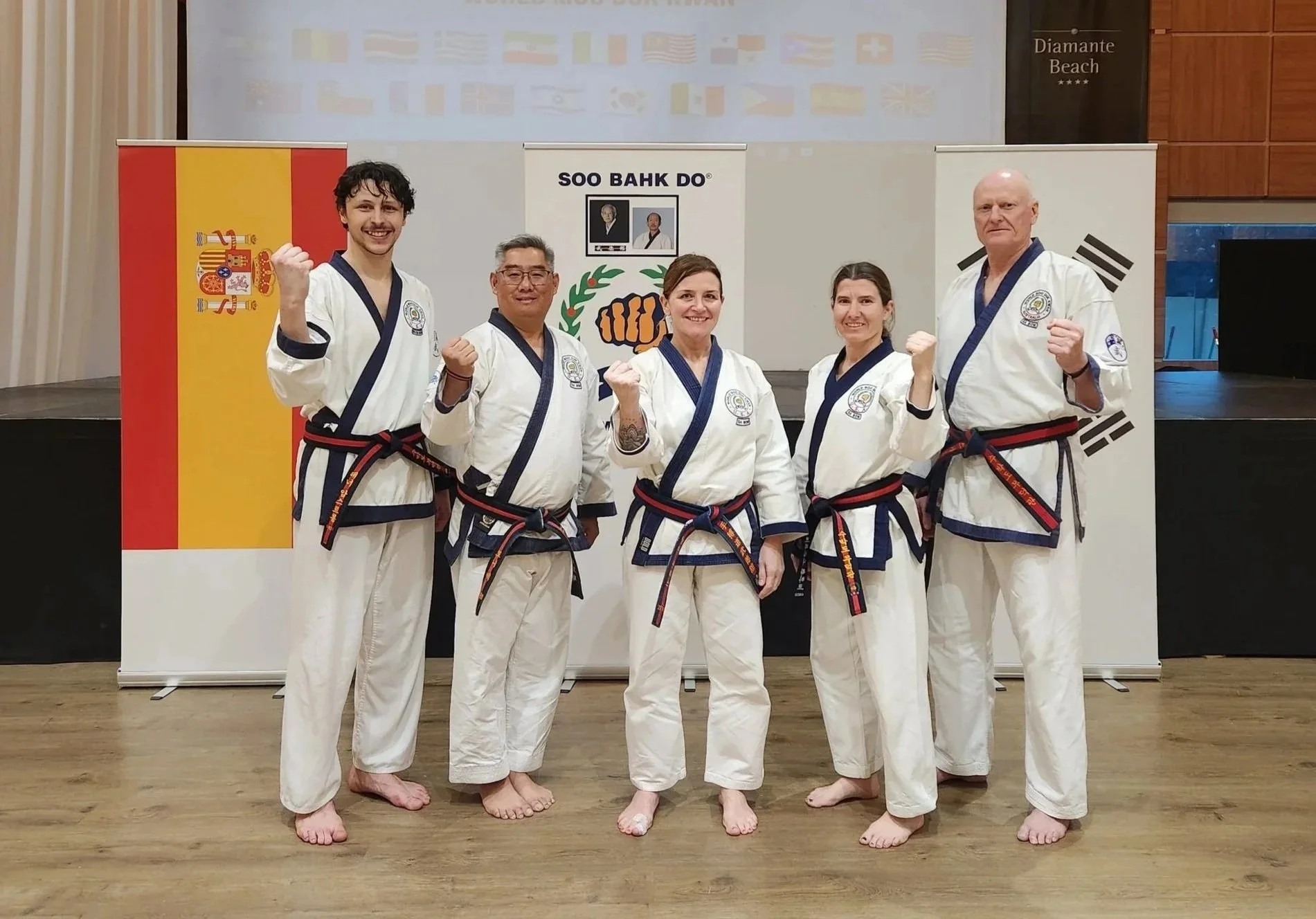
The long stripe. Master level. Poetry in action. A lifetime dedicated to training. The road is long and grueling, the exam even more so: a full week of training - eat, sleep, Soo Bahk. These high level training events are held at most once a year in each WMDK Zone (Asia & Pacific, North America, Europe, Latin America), bringing together practitioners from all over the world to demonstrate they have what it takes to be Ko Dan Ja.
“Both Master Lockhart and his daughter Ms. Lockhart are exceptional instructors. They instill discipline, respect, and fun into their training curricula… it’s really amazing to witness how confident the young students are. We were impressed at the progression and skill level that some of these kids exhibited.”
—David Yoshihara (5 Star Review on Google)